






To go with the flow
The shift towards wider and looser styles is a blessing for the denim industry as a whole. While structured fits are big, so are the slouchier and more fluid fits, where manmade cellulosic fibres can play a key role in enhancing drape and softness. These changing market dynamics also elevate the notion of comfort in jeans.
New styles have taken over the streets, with people wearing all manner of wide jeans with straight, barrel or flared legs. While the power of novelty to drive sales is undeniable, the authentic look and feel of jeans is, with a rare exception, non-negotiable. For companies specialising in manmade cellulosics – fibres ideally suited to deliver a fluid and flowing silhouette – the challenge lies in delivering these properties without deviating from the core denim aesthetic. It is a prerequisite for all suppliers of non-cotton fibres seeking to set a foot in the world of denim. There are, too, good reasons to combine cotton with another fibre that can add strength, drape, or offer a cooler or warmer hand feel.
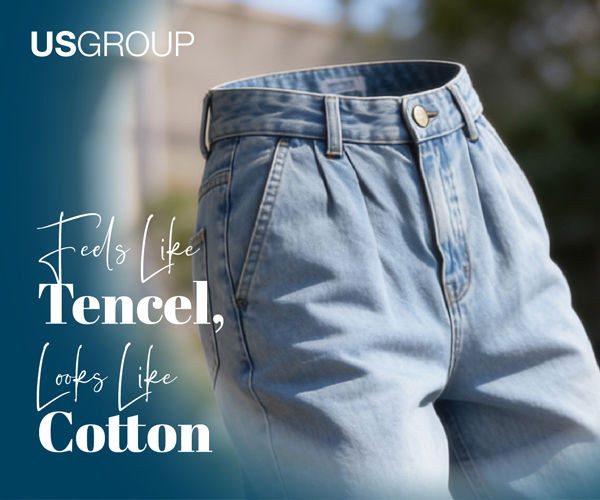
Lenzing has a history of creating special yarns for denims, from matte versions of its Tencel lyocell to dope-dyed modal yarns. The newest, Tencel HV100, has been engineered specifically to emulate cotton. Tuncay Kiliçkan, Lenzing’s global business development manager for denim, says “it took a while to merge the famous Tencel softness with the iconic cotton look and we are thrilled to fulfil this industry demand”. Launched in October 2025, he says it has been “well-received” and that “test orders from brands are starting to hit the stores”.
The new Tencel HV100 “mirrors nature’s irregularities”, a property achieved by using a Variocut technology that creates deliberate variations in fibre length within a bale. In addition to its added texture, the fibre has a matte finish typically associated with natural fibres. It is as soft as a standard Tencel yarn, but is said to be less slippery, another denim-friendly characteristic. Beyond its look and feel, the company says it also has a better environmental profile, offering savings of 50% in water consumption and in carbon emissions compared to generic lyocell, according to LCA data used by the Higg Index.
At Kingpins last October, nearly 20 mills had made denim fabrics with the novel fibre. “This evolution brings the fibre closer to the essence of heritage denim, with a richer, more intense uptake of indigo dye – deep, soulful, and beautifully authentic. All of this, while preserving the signature softness and drape we love in Tencel. In my view, it bridges the core denim look with the elevated hand feel that defines modern comfort,” said Adriano Goldschmied at launch. Oktay Okuroglu, Orta’s head of sales, marketing and product development shares a similar view: “When I saw the results, I said, ‘we did it’. It wasn’t grey, it wasn’t shiny, and it reacted to the indigo dyeing and washing exactly like cotton. To the eye, you cannot tell the difference; to the touch, you feel the softness and the comfort that you cannot get from a 14oz cotton fabric.”
Tuning yarns for denim
Eastman, the maker of Naia acetate, is also looking to tune its manmade cellulosic fibre to achieve the critical denim industry aesthetics. “Our exploration of Naia in denim is currently centred on Naia Renew staple fibre, which opens up new possibilities for integrating cellulose acetate into denim fabrics,” Chad Doub, Eastman’s global manager for casual wear & home, tells Inside Denim. He adds that, in practice, the company’s focus is “less about introducing entirely new yarn categories” and more about “working with mills to develop the right blends and fabric constructions”. Depending on the performance and aesthetic goals of the fabric, Naia Renew can be spun with cotton fibres, lyocell or polyester. “What makes this particularly interesting for the denim space is the opportunity to introduce a new comfort dimension into a category traditionally associated with rigidity and structure, while still preserving the authentic look and character that define denim.”
Naia Renew is made from 60% sustainably sourced wood pulp and 40% certified recycled content derived from Eastman’s chemical recycling technology, which gives it a reduced carbon and water footprint, the US-based company says. Mills that first trialled the fibre in 2024 include Advance Denim, Kilim, Kipas, Realteks and Çalik. This April, Eastman is returning to Kingpins with a new offering. China-based Advance Denim is showcasing samples.
“Naia Renew is a cool fibre that has many great attributes,” says Mark Ix, sales manager at Advance Denim. His penchant for the acetate yarn stems from his personal history as his family owned weaving mills that made lining fabrics from acetate. “The fibre has a different hand feel compared to Tencel, and this adds a point of differentiation,” he says. From a comfort and performance point of view, he mentions its wicking properties and cool touch as key assets.
Like Tencel, Naia Renew is ideal to add a fluidity to wide-leg jeans. But as has been the case for Tencel, widespread adoption of Eastman’s fibre will not “happen overnight,” says Mr Ix. Most of the orders for fabrics with Naia Renew have emanated from China, where brands are quick to embrace newness. “They want to be the first,” he says, “and they don’t mind the price.” Key Advance Denim customers, in the likes of Calvin Klein, have introduced the jeans made from Naia Renew in their Asia Pacific offerings.
Drape & performance drive demand
The sustainable profile of regenerated cellulosic fibres is not top of the mind in these troubled times, as their performance features carry more weight. The first one cited is softness, as lyocell and acetate yarns are used in the weft, the fabric side worn next to the skin. “Depending on the construction, the weft yarn may contain up to around 40% Naia Renew, which generally corresponds to roughly 15% of the fibre in the total fabric composition,” says Mr Doub, at Eastman. “This allows mills to introduce new tactile and performance qualities – such as improved softness and moisture management – while preserving the durability, structure and authentic appearance that consumers expect from denim.”
The evolution towards looser silhouettes has opened the door to a broader range of fabric constructions, he says. “In spring and summer collections, Naia can be integrated into lighter-weight denim blends, sometimes combined with fibres such as hemp or other cellulosics to enhance breathability. In colder seasons, it can be incorporated into cotton-rich denim fabrics while still elevating softness and wearability.”
At Lenzing, Mr Kiliçkan notes that a stiff fabric used to make wide-leg silhouettes will not be very comfortable to wear. “The softness and the drape that Tencel provides are very much directional in the market, especially for women, and I do not think they will disappear for a while,” he says. Denim is a key market for the Austrian group, a sector where Tencel has gained a strong, though modest, foothold. “The denim industry is very agile, and open to innovation. This is essential for Lenzing as we are constantly striving to help the industry be better.” Furthermore, “brand awareness of Tencel is much wider in denim than in other textile industry segments,” he adds.
The proportion of Tencel used in denims depends on the product, starting from pure Tencel lyocell denims for shirts, dresses and skirts. “When it comes to bottom weights, the percentage of Tencel lyocell ranges from 40-15% of the overall composition,” says Mr Kiliçkan. But this proportion also depends on market conditions. “Considering the cost pressure and the soft cotton prices, increasing the share of Tencel lyocell is currently challenging.” He does expect its presence in denim fabrics to increase “due to insufficient cotton supply projections against future growth in fibre demand”.
A fibre with a premium
Tencel has carved out a niche in jeans, and mills cite its presence in their collections as an added value. Rajby’s Air Loom denims feature soft, breathable fabrics made from blends with Tencel matt and Tencel HV100, or Circulose. “They create a gentle drape and a barely-there feel,” says Rajby’s marketing manager Kanwal Noor. Sharabati uses lyocell in some of the more feminine and fluid references of its Twillis collection. “In the Infinity range, which is dedicated to women’s wear, we have added more fabrics with linen and Tencel,” says Stefano Doto, product design manager. Adriano Goldschmied chose a Tencel satin weave with a new Moonskin finish made by Isko for his Daily Blue collection.
“Denim containing MMCFs can be engineered to achieve a wide range of looks, from vintage and authentic character to modern premium finishes. These fibres excel in applications where denim needs enhanced softness, lighter weight, and improved fluidity,” says Hasan Javed, AGI Denim’s executive director. The Pakistan based mill created a fabric for a capsule collection made by H&M combining Tencel Refibra x Circ, whose lyocell yarn is made from pulp derived from recycled textiles. The Swedish retailer used the fabric to make men’s styles, a sign that the soft and fluid yarn has market appeal beyond women’s wear.
With the integration of cellulose pulp made from textile waste, manmade cellulosics can now add circularity as an asset, a perk that has appealed to Mud Jeans, known for its jeans made from recycled cotton. The Dutch brand worked with Lenzing to develop a premium, low-impact denim fabric that combines recycled lyocell with recycled cotton. “Blending Tencel Refibra into our recycled cotton denims gives us the best of both worlds: the soft, cool hand feel and fluid drape people love, plus the strength and breathability great jeans demand. It elevates comfort without sacrificing authenticity – and fits perfectly with our mission to make circular fashion the new normal,” says Mud Jeans CEO Jolanda Brink.
British retailer Marks & Spencer has stepped up its denim offering and now claims to sell 10 pairs of jeans a minute in Britain, giving it an 18.2% market share in women’s jeans and 12.1% in men’s, according to Kantar’s Worldpanel by Numerator for the 52 weeks ending on Dec 7, 2025. Key styles driving sales include wide and barrel leg jeans, along with lyocell-blend palazzo pants. M&S says it has sold 105,000 pairs of barrel-leg jeans since first introducing the shape in March 2025.
“In many ways, the rise of relaxed silhouettes reflects a broader transformation of denim – from a purely durable workwear fabric to a comfort-driven lifestyle material,” says Chad Doub, at Eastman. Mr Javed, at AGI Denim, agrees: “The shift toward looser and baggier silhouettes has contributed to growth in MMCF fibre use. However, that is only part of the story. The broader shift is toward denim that feels more comfortable, wearable, and adaptable to everyday life.”
If sales of jeans are up, they are undoubtably driven by the new shapes that fill a gap in many people’s closets. These styles can and are made from pure cotton denims, but a measure of lyocell or acetate does enhance their drape and soft touch. Could this spell the revenge of denim over the easywear comfort of athleisure?
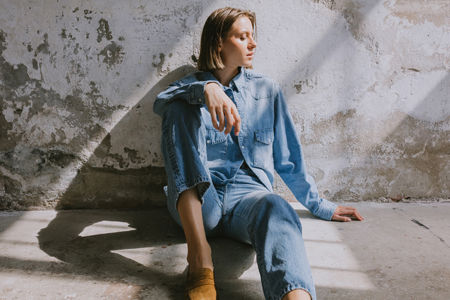
Lenzing’s new Tencel lyocell HV100 has been engineered to deliver the look and feel of cotton. Photo: Lenzing


