






Cut from a different cloth
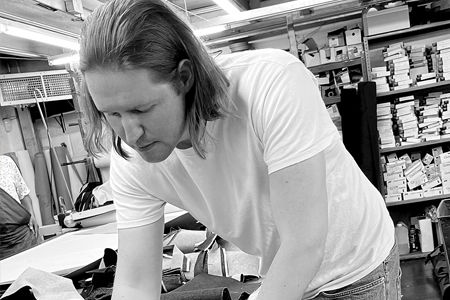
Matthew Hegarty, founder of London-based brand Hegarty, sees denim and outerwear as the defining items in any wardrobe and tells us why UK manufacture and fabrics provide the foundations on which the business is built.
For readers who don’t know, can you explain your background? What gap did you see in the market?
Before launching Hegarty, I worked as a commercial fashion photographer for many years. That experience gave me a very close relationship with fashion. When you spend years photographing garments, studying how they move, how they’re cut, how they sit on the body and how they translate visually, you begin to understand them in a very detailed way. That perspective became incredibly valuable when I started designing.
In the early days especially, photography was essential because the brand was and still is completely independent and self-funded. Everything came from the proceeds of my photography work, so there wasn’t a large marketing budget behind it. Being able to photograph the collections myself meant I could present the garments in the best possible way and give the brand a visual identity from the beginning. I’ve always admired designers who kept that creative control, someone like Karl Lagerfeld, who famously photographed many of the campaigns for Chanel himself.
The other thing that really motivated me was the question of where fashion is made? There are many British brands, but relatively few that still manufacture here. The UK has an extraordinary heritage of craftsmanship, from tailoring to outerwear and I felt there was space for a brand that genuinely produced garments here.
Outerwear became a natural focus because I’ve always believed that a coat or jacket is often the most important piece of an outfit. A well-cut piece can define the entire look. Even with very minimal styling, a pair of jeans and a T-shirt, for example, the right coat brings everything together. That idea of a strong, architectural outer layer is really central to Hegarty.
Denim was the other pillar because I’ve always loved the material itself. There’s something special about raw indigo denim. When it’s new it’s rigid and structured, and then over time it softens and moulds to the wearer. While the UK isn’t traditionally known for denim in the same way that countries like the US or Japan are, London is an incredibly strong fashion city and a real tastemaker. I felt there was an opportunity to approach denim from a slightly different perspective. Not just producing another standard five-pocket jean, but thinking about silhouette, construction and how the material can be used in new ways.
You are focused on using UK fabrics and manufacturers as far as possible. Why is this important, and have any supplier partnerships particularly stood out to you?
I work closely with a small number of key suppliers whose craftsmanship and reliability are outstanding. Mills such as Abraham Moon & Sons, British Millerain and Mallalieus of Delph produce some of the most beautiful wool fabrics available anywhere in the world. For leather pieces we work with GH Leathers, and for denim we use cloth from Hewitt Heritage Denim. You don’t need dozens of suppliers, just a few great ones who understand what you’re trying to achieve and consistently deliver exceptional quality.
Another important factor is proximity. Because everything is relatively close, I can visit the mills and factories, see fabrics being developed, and stay closely involved in the production process. That relationship with the people making the garments is incredibly valuable. It allows you to refine details quickly and maintain a real sense of connection to how the product is made. There’s a sustainability benefit in keeping the supply chain local, materials and garments aren’t travelling halfway around the world before they reach the customer. There’s also something very meaningful about building a brand this way.
In terms of manufacturing, our outerwear and denim jackets are produced by Tower Garments, while our jeans are made by Stylised Limited in East London. Both have been fantastic partners to work with. I’ve also been in conversation with Blackhorse Lane Ateliers, particularly regarding denim washing. They have developed one of the few denim wash facilities in the UK, which is very exciting because it means even more of the production process can potentially remain local. There’s nothing confirmed yet, but it’s an area I’m definitely interested in exploring in the future.
What do you like most about denim?
What I love most about denim is its character. It’s one of the few fabrics that genuinely evolves with the person wearing it. Over time it softens, fades and moulds to the body, creating a completely individual piece. Two people can wear the same pair of jeans or jacket and they will look entirely different after a few months. That personal relationship with a garment is something I find incredibly compelling as a designer.
There is also a cultural energy around denim that has always fascinated me. It has a rebellious spirit, it’s relaxed, confident and never formal. Denim has always carried that sense of independence. Yet at the same time it can be surprisingly refined. A well-cut pair of jeans can be worn in a way that feels almost tailored.
How do you go about selecting your fabrics, and what’s important in terms of mills or fibres?
Fabric selection is a very hands-on process for me. It usually begins at textile trade fairs in London, particularly TexPremium and The London Textile Fair, where you can meet mills directly and see the materials they are developing. It’s an invaluable way of discovering new fabrics and building relationships with suppliers. From there the process becomes very tactile. You need to spend time with the cloth itself, feeling the weight, the texture and understanding how it might behave once it becomes a garment. A fabric might look beautiful in a swatch book, but the real test is how it moves and wears.
I’m naturally drawn to natural fibres such as cotton and wool. With denim in particular, I prefer working with 100% cotton because it ages so beautifully and develops a unique patina over time. The way raw indigo softens and fades with wear is part of the magic of the fabric. Working with heritage mills is also very important to me. For example, we have used selvedge denim produced by Hewitt Heritage Denim, woven in England. Ultimately the decision always comes down to sampling. You produce a prototype, see how the fabric behaves on the body, and only then decide whether it deserves to become part of the collection.
Who do you see as the typical customer of Hegarty, and what are their values, and how do they inspire your new products and designs?
The Hegarty customer is someone who values quality, authenticity and thoughtful design. They are interested in where their clothes are made and how they are made, and they appreciate the difference between something that is simply produced and something that has been carefully constructed.
Fashion ultimately has to look great first. Sustainability and ethical production are extremely important, but a garment also has to inspire confidence. If something doesn’t make you feel good when you wear it, then it hasn’t really succeeded. The Hegarty customer understands that balance. They want pieces that are responsibly made, but are also beautifully designed and distinctive.
You showed at London Fashion Week last year for the first time and will take part again in September. Can you tell us about the preparation that goes into the show?
Showing as part of London Fashion Week for the first time was a very significant moment for the brand. It’s something I had always aspired to, so being invited to participate by the British Fashion Council felt like an important milestone. Because Hegarty is still an independent label, we present our collections digitally rather than through a traditional runway show. Even so, the preparation is substantial. Each piece needs to be designed, produced, photographed and filmed in time for the official schedule, and the imagery must clearly communicate the spirit of the collection. Some of the garments we present during Fashion Week are not yet commercially available. They exist as part of the broader creative direction of the brand, offering a glimpse of where the design language is heading.
What are your growth plans for the brand and what can we expect next?
The next stage of growth for Hegarty is centred around expanding the collection in a thoughtful and deliberate way. Denim will remain a central pillar, but the goal is to build a much broader and more developed wardrobe around it. The intention is not simply to produce variations of existing products, but to create pieces that bring something distinctive to the collection and brand. I strongly believe that when you design something, you need to feel that you have something unique to say. It isn’t about producing endless versions of whatever happens to be selling well at the time. Each garment should contribute to the overall identity of the brand.
Finally, what’s your personal connection to denim, and do you have any standout denim pieces in your own wardrobe?
Denim has always been a central part of my wardrobe. I wear it every day because it has that rare balance of comfort, confidence and style. It can feel relaxed and effortless, but with the right design it can also be incredibly refined. What fascinates me most is the way denim evolves with wear. The creases, fading and subtle marks that appear over time become unique to the individual. In that sense, a good denim garment becomes almost like a record of the life lived in it.
I’ve collected denim pieces for many years. One of my favourite jackets is a 1970s-inspired trucker from Levi’s, which I’ve kept because it captures that classic silhouette so well. I also have a fantastic boxy vintage denim jacket I discovered in a vintage shop in Oxford many years ago, which my sister borrowed for years.
More recently, though, the pieces I wear most often are Hegarty. I design everything myself. It's wonderful to create something from scratch that has my label and that you can feel really proud of. It's an essential part of the design process, if I wouldn’t wear something myself, I wouldn’t expect anyone else to either.
Matthew Hegarty takes a hands-on approach to design and manufacturing, with regular visits to suppliers. “Denim has always carried that sense of independence. Yet at the same time it can be surprisingly refined”. Photo: Hegarty


